See a York osteopath today
Don't Let Your Problem Get Any Worse
Book A Consultation Today With One of Our Osteopath’s

Book A Consultation Today With One of Our Osteopath’s

Ever wondered why you are in pain, what caused it and how to best get better? Will I have pain forever and what can I do at home for myself? Our Osteopathy consultations help us discover the cause to your problem.
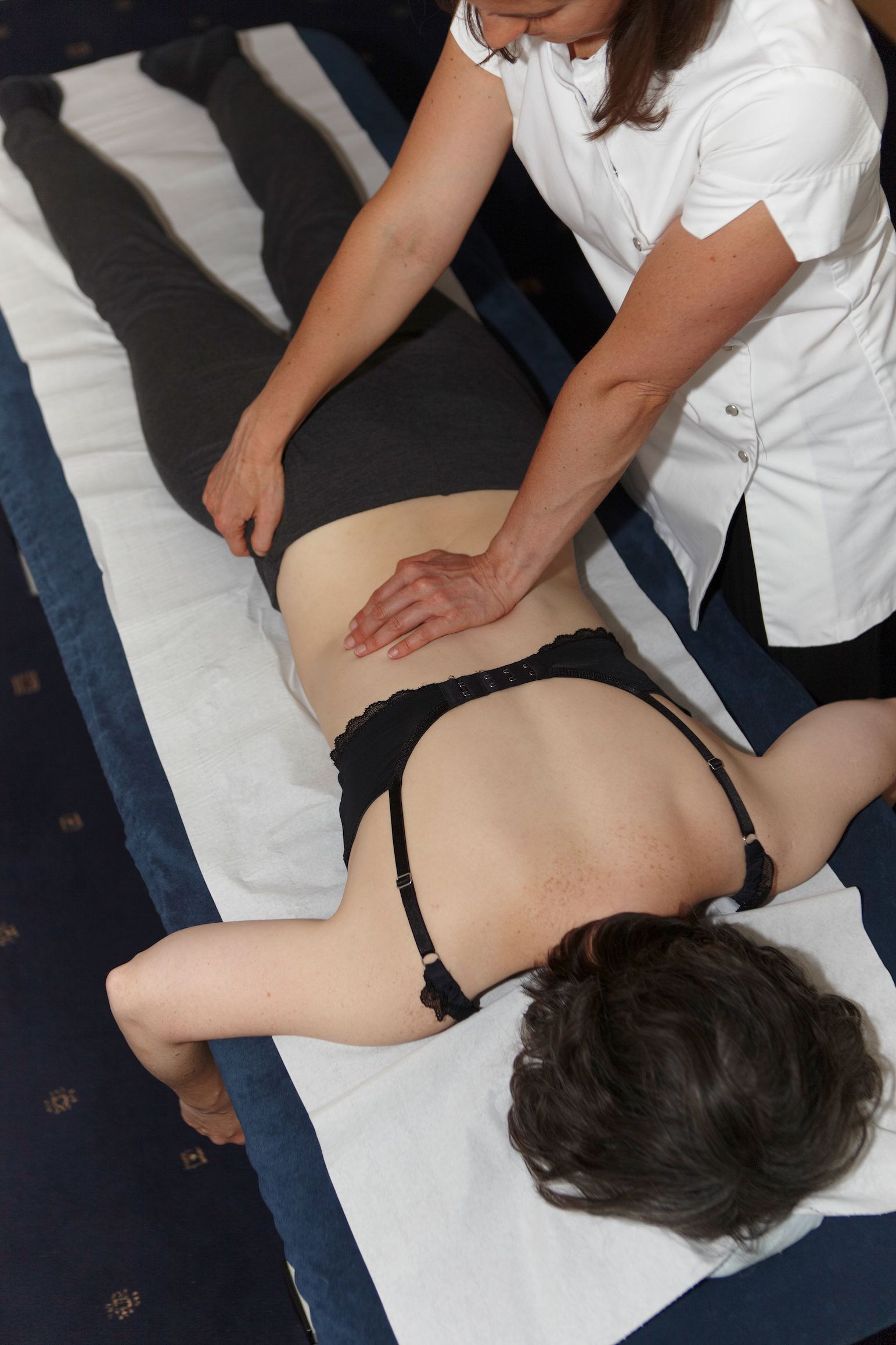
We use our hands to ease away tension and calm down your nervous system. We treat the area that hurts as well as the underlying problem.
Sick of feeling stiff in the morning or once you've sat for too long? We use massage and joint manipulation to get your body moving.
We are not just manipulators, we are educators of the body. Discover how you can maximise the healing progress and prevent your problem returning.
Osteopathy is a system of medicine, which treats the whole person and not just the symptomatic area. Treatment is hands-on and involves skilled manipulation of the spine and joints, and massage of soft tissues.
What you need to know
**** Appointments for Osteopathy are available from Monday to Friday with appointments from 9.30am to 7.15pm depending on the day and practitioner. ****
The osteopath’s main focus is to improve the normal functioning of the spine as this is essential in the maintenance of health. The spinal cord can be described as an extension of the brain, which controls all the functions of the body. The nerves that exit from the spine not only control the muscles but all the organs, blood vessels and glands.
Spinal restrictions can cause interruption to the nerve signals going to and from the cord. By treating these restrictions, the health of the body can be restored.
Osteopaths do not consider the spine to be the only factor in health and disease. Genetic, developmental, dietary, environmental and psychological factors can all play a part in causing disease.
Osteopathy places main emphasis upon the diagnosis and treatment of structural and mechanical imbalance of the body and regards manipulative therapy as one of the most important factors in the prevention of disease, along with dietary and lifestyle factors being other major contributory factors.
Osteopaths also use other methods of natural healing. We can offer advice on good posture and self help, such as exercises and diet, to prevent the pain recurring and maintain good health.
Although musculo-skeletal injuries are the most commonly seen, the following problems frequently respond well to Osteopathic treatment:
Most people would benefit from Osteopathic treatment at some time during their life. Patients may be treated for health problems from the trauma of birth to the arthritis of elderly people.
Babies and children can also benefit from these more gentle techniques, helping things such as digestive disturbances when the body is relaxed and working efficiently the immune system can work more optimally too. Patients often report improvement in sleep from improved relaxation and comfort.
Treatment is focused on treating the person and not just the symptoms. Osteopathy guides your body to enable your natural healing energies to bring you to better balance, harmony and health.
Spinal Manipulation was found to be effective in the treatment of low back pain in the BEAM trial (2004) sited in the British Medical Journal (1) and also in the latest Government guidelines osteopathy was recommended for persistent low back pain (NICE 2009) (2).
Patients have also reported improvement with all different aspects of their health by removing tension from the relevant areas of their body contributing to symptoms. The most important thing to remember is that rather than focusing on dis-ease, as an alternative therapy we look to build and improve health.
(1) http://www.bmj.com/cgi/content/full/329/7479/1377
(2) http://www.nice.org.uk/newsroom/guidanceinfocus/infocuslowbackpain.jsp
Osteopathic health check ups are a great way of looking after your body as we grow throughout life. Just as we would have our eyes tested and teeth examined – so the spine is a vital part of our body’s functioning and with gravitational forces, postural strains, patterns can build up which if not released could store up tension contributing to problems later on in life. It is always easiest to correct a spinal misalignment as soon as it has occurred to prevent further compensatory patterns developing. Prevention is always better than cure.
Whilst recognising the importance of the spine in the improvement and maintenance of health, the practice of Osteopathy is now much wider than the mere examination and treatment of the spine.
Most people first consult an osteopath because of back trouble but Osteopathic Manipulation is also of great value in the treatment of musculo-skeletal conditions anywhere in the body. Emphasis is placed on the structural integrity of the whole body.
This can be due to a mechanical strain or sprain, of sudden onset or from long term repetitive movement. The body has an amazing ability to be able to compensate and adapt to the stresses applied to it, however, pain is experienced when the body is no longer able to compensate. Pain is a warning signal to prevent further damage. Inflammation in the surrounding tissues causes stiffness, which can be eased using gentle techniques to improve tissue drainage.
When you visit an osteopath for the first time a thorough case history will be taken and you will be given an examination.
As in all healing arts, the prerequisite of successful treatment is accurate diagnosis. Patients will normally be expected to undress down to their underwear in order to complete a detailed examination of posture and to perform a simple series of movements in order to determine the cause of the presenting problem. Changing facilities are available as well as a blanket for your modesty. Stretchy clothing maybe worn but can sometimes inhibit the full scope of treatment.
In some cases, it may be necessary to undertake additional investigations such as x-ray or blood tests in order to arrive at a full diagnosis and a suitable treatment plan for you.
Osteopathy is patient centred so that each treatment is tailored to you as an individual. Treatment emphasis is placed on adjusting the whole body and not just the symptomatic part. It is designed to alleviate the current problem and to help prevent recurrences.
“I had 2 appointments with an Osteopath at York Natural Health. The phrase “should have done this years ago” applies in this case”
Craig Eddington, YORK
We examine your body from head to toe, as well as knowing whether we can help you.
We help you to understand what is wrong with your body so we know how to best treat you.
Our Osteopaths will be able to give you a personalised treatment plan over a course of treatment.
Having poor posture is not always a reason that you are in pain but having good posture allows your body to run smoothly.
We give you homework! Our exercises ensure you can treat yourself at home.
We give you the best advice on how you can improve your health and maximise the healing process.
Running a business is hard enough without also having to worry about aches and pains, so let us worry about it, instead.
There's nothing harder than juggling a busy household as well as keeping on top of your health. So let us fix that for you.
Sitting at your laptop for long hours into the night? Allow our Osteopaths to treat your back and neck so you can graduate pain free.
It's better to grow healthy children than to fix injured adults. We use cranial osteopathy and gentle techniques for your child.
Are you training for a race or sporting event but your pain or problem is stopping you perform to your best? We treat sports injuries too.
Don't allow your aches and pains to get in the way of spending more quality time with your grandchildren, friends or family.
about osteopathy
It depends on who you are…
If you’re a business owner, Osteopathy is a great way to relieve neck and back pain if you sit in meetings all day and have a lot of stress. It’s also a great way to keep your body healthy if you can’t commit to a gym routine.
If you’re a parent, Osteopathy can help you relax after running a busy house hold. New mum’s can experience a lot of pain breast feeding and while many fatigued from sleepless nights. Osteopathy can get you moving again and feeling more energised.
If you’re a student, revision can take hours, research and coursework deadlines can be stressful. Many students come to see us with headaches, neck and back pain, the very thing we specialise in.
If you’re an athlete or use your body as the “tools of your trade” you can not afford time off work or sport due to injury. We give exercises to help you recover long term as well as manual therapy to get you better.
Osteopathy is generally regarded as a safe treatment option for musculoskeletal pain or problems, although some may experience minor side effects, such as:
These effects usually develop within a few hours of a session and typically get better on their own within 1 or 2 days.
Osteopathy isn’t usually painful, although it’s not unusual to feel sore or stiff a couple of days after your treatment, particularly if you’re having treatment for a painful or inflamed injury.
Your osteopath will explain whether you’re likely to have any reactions. If you feel any pain during or after treatment, tell your osteopath.
Osteopath’s have very good diagnostic skills as a primary health care professional. Osteopath’s are good at knowing when a patient is safe to treat or whether they need to be referred to their GP or for further tests.
Most patients ‘self refer’ to an osteopath for treatment.
Although, referral by a GP is not necessary. Patients are encouraged to keep their medical records current by keeping their GP informed about their current state of health and any additional treatment they are having.
Osteopathy is a regulated health profession that’s distinct from nursing, medicine and pharmacy.
Regulation works in much the same way as regulation for medical doctors.
No longer are Osteopath’s regarded as “Alternative” but are recognised Allied Health Professionals via the Allied Health Professions
By law, osteopaths must be registered with the General Osteopathic Council (GOsC).
The GOsC only accepts registration from practitioners who have a qualification in osteopathy that’s recognised by the GOsC and who comply with their standards of practice.
Osteopathy and Chiropractic are very similar forms of healthcare.
In the UK both Osteopaths and Chripractors are statutorily regulated with their own Acts of Parliament and their own General Councils.
There is therefore a huge overlap of both professions with a large portion of their workload being very similar.
The way practitioners describe themselves highlights the differences in their approaches and their underpinning principles and philosophies.
If is always difficult to say as it depends on the person, their condition and how they respond to treatment. Some cases of low back pain can take 6 weeks to see possibly 50% improvement in symptoms. Some patients respond really well and can recover within 2 weeks. We say that 3-6 visits offers the best results.
York Natural Health Ltd. Registered in England and Wales No: 08956441 Registered Office Address: 36 York Road, Acomb, York, YO24 4LZ
Subscribe to our newsletter for news, health advice and discounts at York Natural Health.
We promise to keep your privacy safe